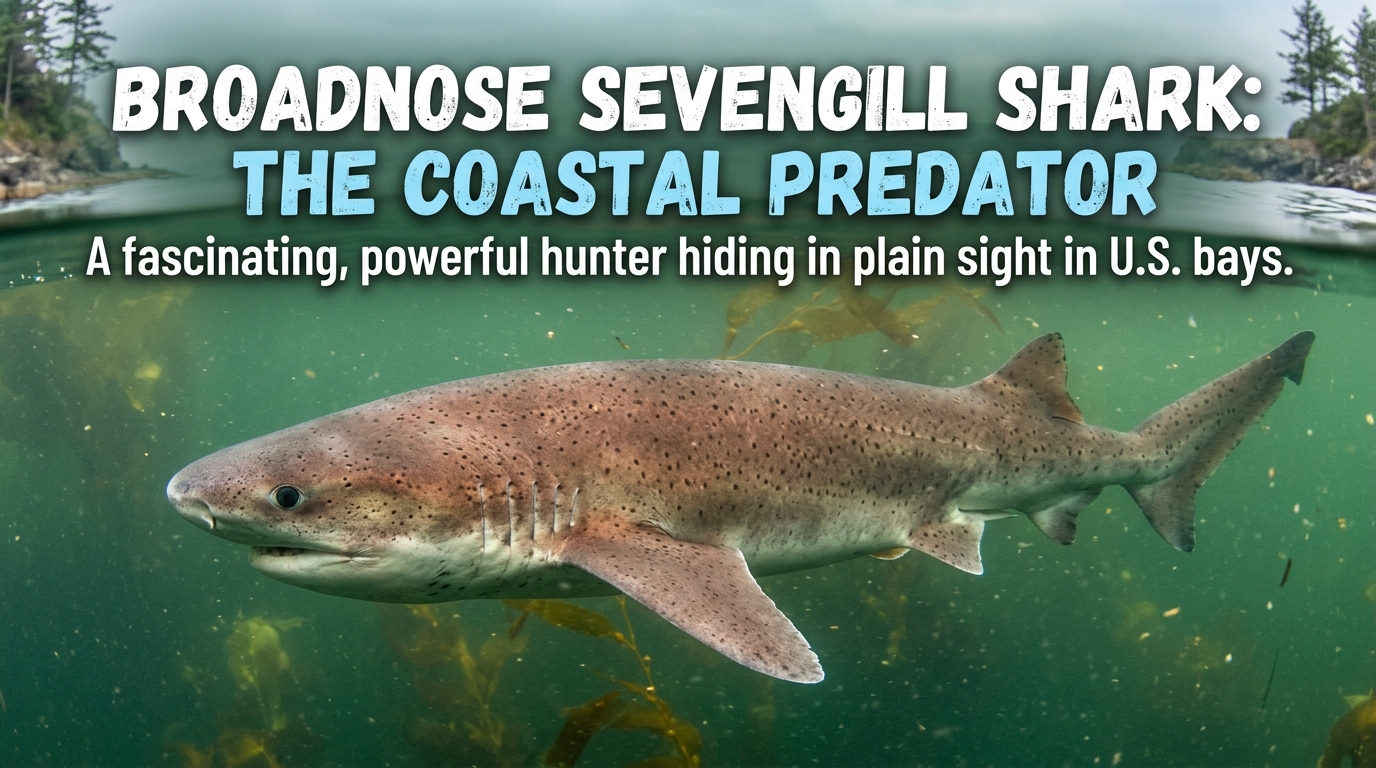
Unlike the great white, the broadnose sevengill shark rarely makes headlines — but it’s one of the most fascinating apex predators swimming in U.S. coastal waters, from California bays up through the Pacific Northwest.
What Makes It Different
Named for its seven gill slits (most sharks only have five), this shark is a stocky, powerful hunter with a broad, blunt snout and just a single dorsal fin set far back near its tail — another feature that sets it apart from most other shark species, which typically have two. Its back is usually a reddish-brown to olive-gray, speckled with small dark spots, while its underside is pale cream.
Sevengills can grow impressively large, with some individuals approaching 9 to 10 feet in length. Despite their size, they’re generally not considered a serious threat to humans, though — like any large predator — they deserve respect and a healthy distance if encountered.
Where You’ll Find Them
Sevengills prefer shallow, inshore waters — bays, estuaries, and channels — which is exactly why sightings near beaches and harbors tend to catch public attention. Larger adults will sometimes venture into deeper offshore waters, but most of their lives are spent close to shore, often using these coastal bays as nursery grounds for their pups.
Interestingly, researchers have recently confirmed sevengill sharks in areas further north than previously documented, including parts of the Pacific Northwest where they weren’t historically recorded in large numbers. That suggests these sharks may be expanding their range along the U.S. coast, a trend scientists continue to study closely.
An Apex Predator With a Big Appetite
What makes this species genuinely interesting to marine biologists is its diet and role in the ecosystem. Sevengills aren’t picky eaters — they’ll go after other sharks, rays, seals, bony fish, and even carrion. That places them near the very top of the coastal food chain, second only to great whites and orcas in many regions where they overlap.
Sevengills are also known to hunt cooperatively, sometimes working in small packs to take down prey larger than a single shark could manage alone — a rare and remarkable behavior among shark species.
Why It’s Worth Knowing About
Most people have never heard of the broadnose sevengill shark, yet it’s been quietly patrolling U.S. coastlines for a very long time. As sightings and research continue to grow, this under-the-radar predator is finally starting to get the attention it deserves — proof that some of the ocean’s most interesting animals aren’t the ones already famous from the movies.