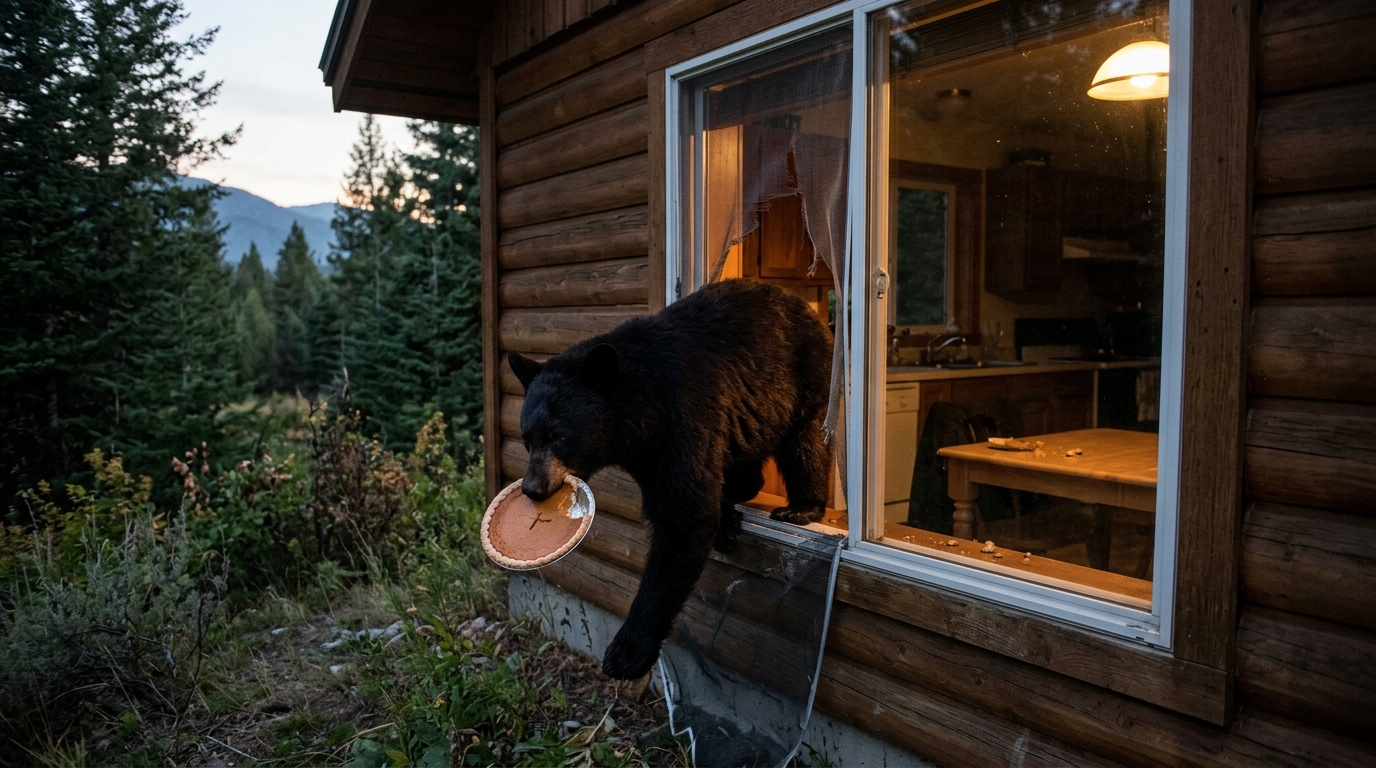
A black bear in Swan Valley, Idaho recently became an unlikely viral story after tearing through a window screen, entering an occupied home while the residents slept, and eating a pumpkin pie left on the kitchen table. It’s the kind of story that sounds funny on the surface — until you learn how it ended.
What actually happened
According to Idaho Fish and Game, the bear entered the home on the night of July 12 through a window screen while the family was asleep, ransacked the kitchen, and ate the pie. The homeowners were unharmed and didn’t discover the break-in until the next morning. The following night, the same bear returned to the property and got into an unsecured garbage can, gaining a second food reward. Because the bear had entered an occupied residence — not just a yard or shed — wildlife officials set a trap, captured the animal, and euthanized it in line with agency policy for bears considered a risk to human safety.
Why “food-conditioned” is the key phrase here
Wildlife agencies use the term “food-conditioned” to describe animals that have learned to associate homes, campsites, or people with an easy meal. Once a bear successfully gets food from a house once, it’s far more likely to return and escalate — which is exactly what happened here. This is why wildlife officials rarely relocate bears that have entered an occupied home: the behavior tends to repeat wherever the bear ends up.
What this means if you live near bear country
Whether or not you own pets, a few precautions reduce the odds of a bear (or other wildlife) getting food-conditioned near your home:
Secure garbage cans in a garage, shed, or bear-resistant container — not left out overnight.
Don’t leave pet food outdoors, especially overnight; it’s one of the most common attractants.
Bring pet food and water bowls inside after feeding, rather than leaving them on a porch.
Keep windows and screens in good repair, particularly in rural or forested areas.
Never leave food unattended on accessible counters or tables near open windows.
For pet owners specifically
If you live in bear or large-predator territory, keep in mind that outdoor pets and unsecured pet food are two of the biggest draws for food-conditioned wildlife. Feeding pets indoors, supervising outdoor time (especially at dawn and dusk), and securing any outdoor feeding stations go a long way toward keeping both your animals and local wildlife safe.
The takeaway
The Swan Valley bear’s story went viral because it’s a genuinely funny image — a bear sneaking in for pie like something out of a cartoon. But wildlife officials see this pattern every summer, and it rarely ends well for the animal. A few simple habits around securing food and garbage can be the difference between a wild animal staying wild, and a story like this one.