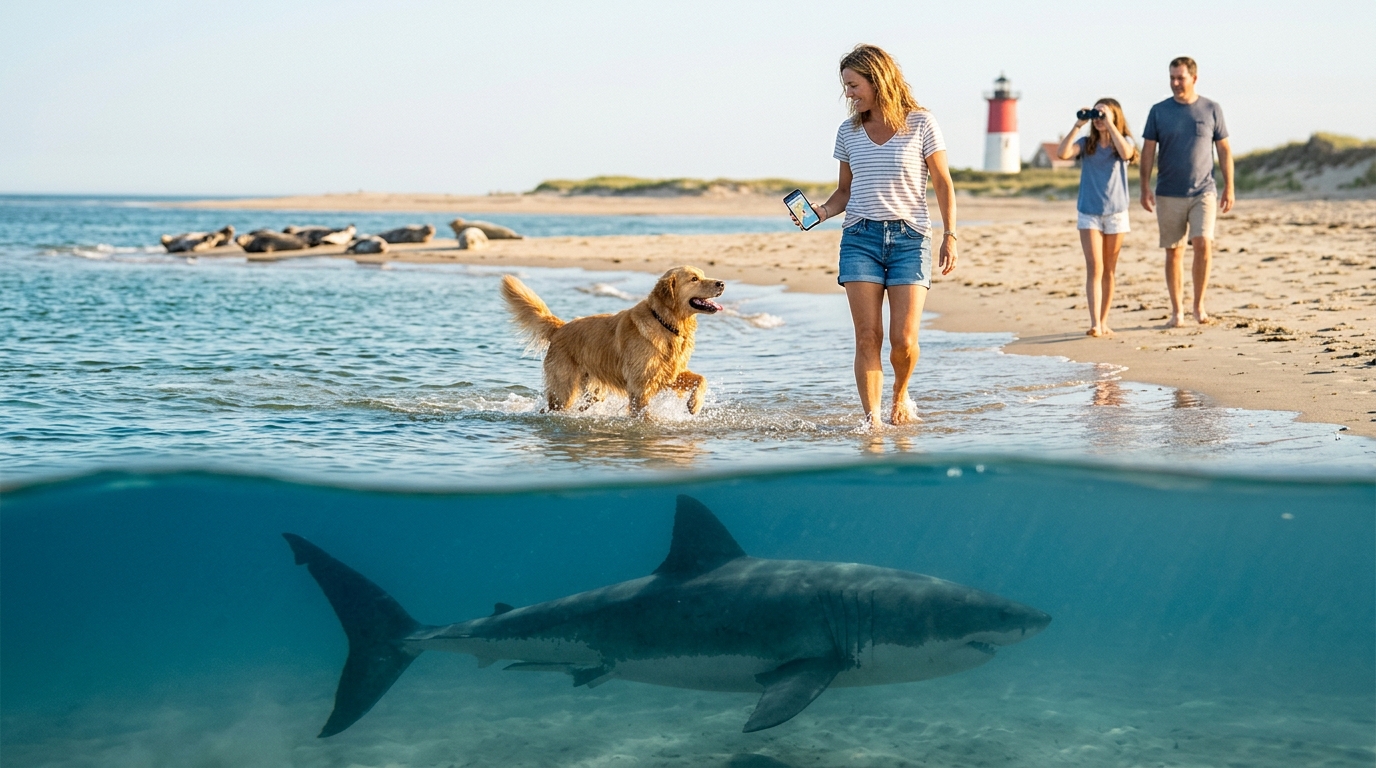
If it feels like great white sharks are everywhere in the news this summer, that’s because they are. Sightings have been reported from Rhode Island to Florida’s Treasure Coast in recent weeks, with researchers capturing rare underwater footage and viral videos racking up hundreds of thousands of views. Add in the fact that Shark Week and National Geographic’s Sharkfest are both airing new specials this July, and sharks are having a genuine cultural moment.
Why are sightings increasing?
Marine researchers point to a few consistent factors:
Growing seal populations in the Northeast, particularly around Cape Cod, have drawn white sharks closer to shore in search of prey.
Better tracking technology — tagging programs and citizenreported sightings through apps — means more encounters are documented than in past decades, not necessarily that shark numbers themselves are exploding.
Warmer coastal waters are shifting shark migration patterns further north and closer to popular beaches earlier in the season.
Does this affect pet owners?
If you live near the coast and regularly walk dogs on beaches, or let pets swim in coastal waters, a few sensible precautions apply during peak shark season (roughly July through October in many regions):
Avoid letting dogs swim near seal colonies or river mouths, both common shark feeding areas.
Keep swims short and close to shore during dawn and dusk, when sharks are most active.
Check local sharktracking apps (many coastal regions now have realtime taggedshark alert systems) before heading to the beach with a pet.
Rinse off pets after saltwater swims regardless of shark activity — saltwater exposure alone can dry out skin and paw pads.
The bigger picture
Despite the viral videos, shark attacks on humans or pets remain extremely rare, and most researchers frame the increased sightings as a genuine conservation success story — a sign that seal populations, and by extension the marine food web, are recovering in parts of the Atlantic. For families spending the summer near the coast with pets in tow, a little awareness goes a long way toward enjoying the water safely alongside the ocean’s most famous predator.